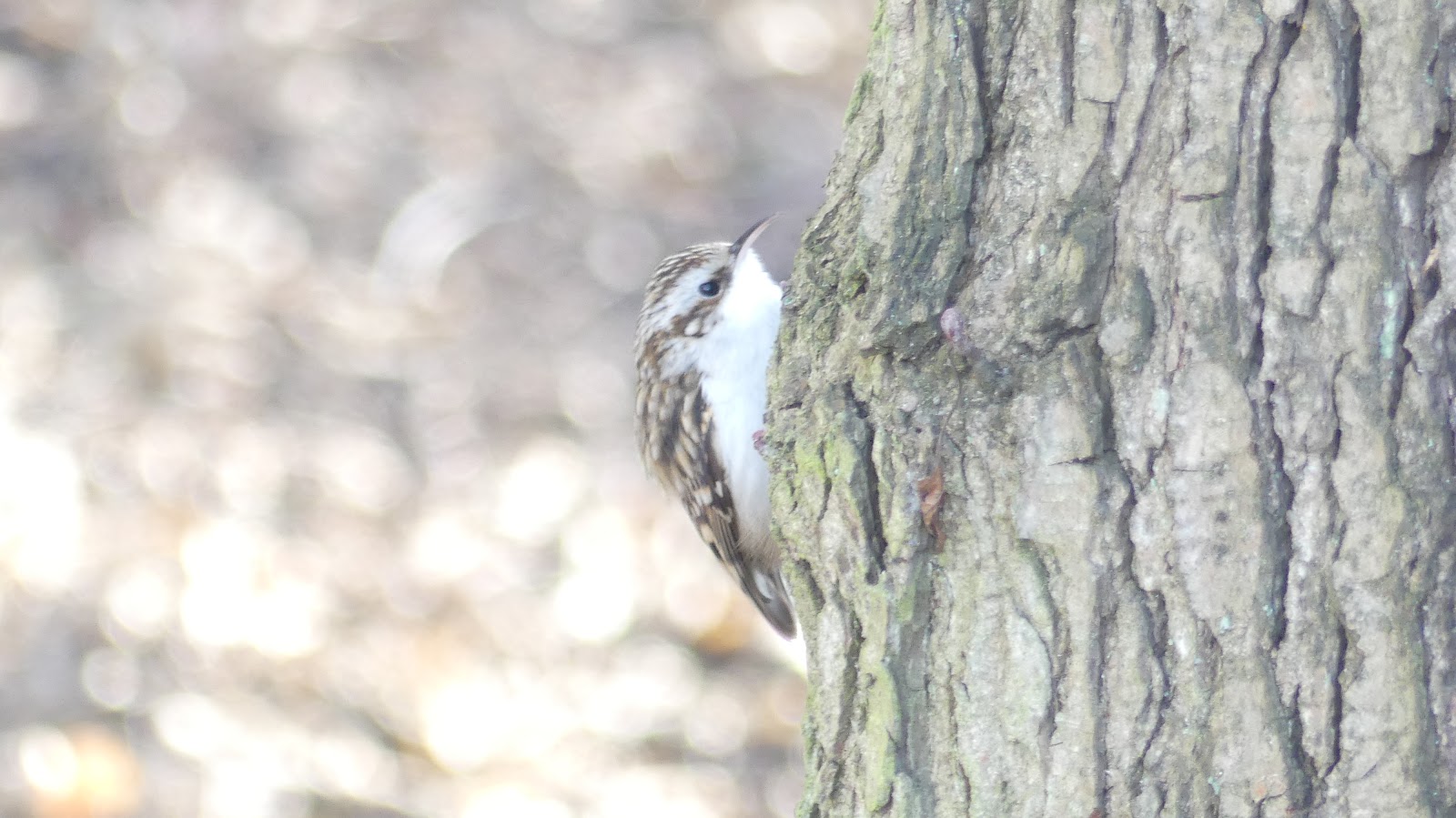
chicken 1

Friday, 14 May 2021

Spring So Far - Mostly Ruislip Lido

With spring slow everywhere around the country, it's not really a surprise I spent most of my hours at Ruislip Lido seeing absolutely nothing. Because the regular migrant hotspots were barely getting anything, looking for migrants at the Lido felt a bit hopeless. However, with all the days and weeks of nothing much, some stuff did appear in the emptiness. 

The first interesting bird of the spring was on the part of my patch that I've only recently been visiting. It's part of Ruislip Woods, but the path runs through the woodland alongside some farmland and open fields, with thick hedges and open ground. Unfortunately most of thickest hedges and fenceposts, probably heaving with Chats and Ouzels, is part of the private farmland, either too distant or completely unviewable - in fact that is probably one of the problems with this site - there is so much green space for migrants to spread out into, most of it being impossible to check. However, there is a thick hedgerow that runs alongside the path, easily viewable, yet on private land so it cannot be disturbed. This spot, and as well as a farming machinery area, are the spots I check most, along with an elevated area with good views over the surrounding fields. 

The hedges hold plenty of birds, with a load  of Chiffchaffs, Blackcaps and a few Whitethroats singing. However, this hedge also managed to draw in the highlight of the Spring so far - a singing Grasshopper Warbler on the 7th of April, complete with the natural soundtrack of the local shooting grounds. Considering they are not too common locally (no clue where the closest breeders are though), it was a pretty exciting bird to have on patch. It stayed all day and into at least the morning of the next, with a couple of local birders managing to catch up with it. 

Grasshopper Warbler singing - in the excitement I forgot to take my phone cover off, but at least I was able to get a recording of the sound


Grasshopper Warbler Bushes 

Aside from that though, these fields didn't really manage to produce anything else yet - although it could be better in autumn.

Somehow, I even managed to miss Wheatear this spring as well, despite dozens of miles walked around local farmland, and an influx of them near the start of the spring. However, there have been a few other highlights - nothing too exciting in the standards of any larger of more rural patches, but still pretty decent locally. While other London patches were recording species like Temminck's Stint, Black Tern and Pied Flycatcher, I was patch ticking Reed Bunting, Sedge Warbler and Red-crested Pochard. That's one of the great thing about patching, though - I don't think, other than when I first started birding, I've ever been more excited by seeing an adult male Reed Bunting, or hearing the quiet subsong of a Sedge Warbler - it really makes you appreciate the commoner species more. My first Cetti's Warbler on site also turned up near the start of the spring, along with the first returning Common Sandpiper. 

Some more migrants did move through as well, though - there were plenty of large hirundine flocks throughout the spring (Sand Martins, House Martins and Swallows) to keep me entertained, along with the first returning Swifts and Hobbies recently. Hobbies are pretty regular, but can never really get boring. 

Other than that though, a showy Yellow Wagtail provided entertainment - the best views I've had of this species here. The Garden Warblers have returned, with about 4-5 singing birds around the area, while Whitethroats and Willow Warbler continue to sing in Poor's Field, including the first Lesser Whitethroat of the year recently. The Redpoll flock is still lingering, along with the occasional flyover siskin and Linnet. Little Grebes are very vocal on the Lido.

Yellow Wagtail

Other wildlife interest came in the form of Slow Worms and Grass Snakes, along with the usual foxes and deer (Muntjac I think). The moth trap was put out once this spring with the enormous total of 2 Moths - 1 Small Quaker and 1 Common Quaker. 

Slow Worm 

I have escaped the Lido a couple of times this spring as well - including a few walks up to an area a couple of miles beyond it to some farmland. A few things have shown themselves here - a large flock of Linnets and, more surprisingly, a random flyover Mandarin Duck - not sure where the closest population even is. 

Another outing to Broadwater Lake was in the hope of some passage gulls and terns, as Staines and Walthamstow were receiving huge numbers of Little Gulls, along with many other places in the country. This turned out to be successful, with more than I expected - a flock of 30 Little Gulls, and the first large flock I had seen. They formed a tight flock and worked there way up and down the lake, sometimes with the whole flock disappearing for long periods. 

Broadwater also produced an Oystercatcher, a singing Sedge Warbler, a flyover Yellow Wagtail and some Red-Crested Pochards - a great site - shame it and the land around is being massacred by HS2. 

I also left London for the first time in 9 months to go to Norfolk for a long weekend - I twitched some Ring Ouzels and saw a summer plumage Spotted Redshank, Whimbrel, Bittern, Crane and Spoonbills - it's always good to be back here. 

Ring Ouzels 
The peak of the Spring feels like it's pretty much passed for my inland patch - the rest of May has some potential but it feels like its mostly about rarer spring migrants towards the end of the month, and given the lack of even a single Wheatear here this spring, I'm guessing none of those will be turning up. But it isn't long before the water levels will fall and return wader passage will start again - any wader other than Common Sandpiper is pretty mega here, so I look forward to seeing what happens in a couple of months.

Sunday, 20 September 2020

The Lido in Lockdown

It's been an unusual year all around the world, with the lockdown meaning I had the longest time I've ever had off school, and a lot of other changes going on, with social distancing and the closing down of many businesses. It meant that for a long time I couldn't travel anywhere, including my old patch, Stocker's Lake. Living in a mostly urban area, there aren't really any birding places or reserves within walking distance. 
Wheatear with the beach and pirate ship in the background 

But there is one - Ruislip Lido, which I do visit a few times a year to go birding. I have always rejected this place as a patch in the past because it's just an overcrowded tourist site in the summer - it has an artificial beach with climbing frames and a cafe, there are always people swimming in the water here and most of the wader habitat, even though there isn't much already, is disturbed by people breaking open or climbing over the fences to sit by the water on the other side. The site is almost unbirdable in the summer months or 'good' weather, so I spend most of my time avoiding the place.

However, with the lockdown, the beach has been closed and the grass areas on one side of the water have been completely fenced off. This gave me an opportunity to start visiting the place again, more regularly than I ever had before. Considering my past experiences, it was a surprise to even see birds at this site, so it was exciting when a Wheatear arrived in the middle of April. I thought this would be the peak of the spring when a few days later, a Little-Ringed Plover appeared on the beach, closed off to the public because of lockdown - it was already better than I expected.

Little Ringed Plover 

Apart from my first Swifts of the year, and a few hirundines including Sand Martins, there wasn't much else here all spring, which was disappointing given the way it started. I spent many hours standing around in Poor's Field, one of the fields next to the Lido, to look for migrants, but had almost nothing. Maybe I just didn't visit often enough. 

It was later in the year, at the start of August, that I had the motivation to visit regularly again. I decided to go every morning and spend 2 - 3 hours looking for migrants in Poor's Field. Poor's Field is a small field at Ruislip Lido, heavily disturbed by walkers, dog-walkers and runners, even in the early mornings, when I visit, although disturbance is limited this early, luckily. It is pretty much the only real passerine migrant habitat at the whole site - while stuff can turn up anywhere, this sort of habitat is the only one similar to the other London parks and migrant hotspots, like Regent's Park or Wormwood Scrubs. 
Even when birding is slow, there are always things like Willow Warbler around to see 

The habitat in Poor's Field is fine, the only problem is the size of the place - compared to anywhere else I know of that gets migrants regularly in London, it's tiny - you can walk around it in 5 minutes, and can see the whole field by standing in one spot. Because of this, I didn't expect much but I hoped that with all the time I spent there something like a Spotted Flycatcher would eventually turn up, although I wasn't confident. I started going there every morning - for almost a week there was nothing in the field, but Common Sandpiper, Redshank and Ringed Plover were exciting waders to see during this quiet period. I was close to giving up at this point, with nothing more than a Lesser Whitethroat and a few Willow Warblers in the field. However, on the 18th August, I arrived to the field and a Spotted Flycatcher was almost the first bird I saw, exactly what I had been hoping for. It was a great bird to see on patch, and gave me the motivation to come back for the next couple of weeks. 

The next day started with a couple of Green Sandpipers flying around the Lido, making themselves obvious by calling constantly. Surprisingly, a Tree Pipit flew over, calling twice - a great bird on patch, which I assumed would be the only one I would see there. 
Spotted Flycatcher 

I met up with another London birder, Kabir Kaul (who also patches the site), a couple of days later, where we saw some interesting birds such as an increased number of Pochards and a lot of fresh Willow Warblers. When I was heading back I heard a familiar call from beside the water - a Yellow Wagtail, which eventually emerged from the vegetation and showed itself. This is a bird I expected as a flyover, but to see one perched on the edge of the water was exciting.
Yellow Wagtail 

Another morning on patch, and I assumed that all the best birds had passed, and that it would get quieter again. Opening the local chat to check what others had seen around London that day, I saw a message about a couple of grounded Tree Pipits at a site not to far away. In the middle of reading this message, something flew up from my feet, called and landed in the nearest tree - amazingly, a Tree Pipit! I'd always thought of flyover Tree Pipits as a possibility, but to see one on the deck was so much better. 
Tree Pipit

The bird then dropped onto the path, where it was immediately flushed by walkers. It then spent the next 10 minutes circling the field, landing briefly in a few trees, before moving on, calling constantly. I, once again, thought birding couldn't get better than this here. The following day proved me wrong. 

I woke up early, expecting nothing, walked to the field and stood in my favourite spot, facing a line of trees bordering the woodland. There were a couple of singing Willow Warblers and a few Chiffchaffs in the bushes, so I stayed here a bit longer. I was watching a Chiffchaff when I noticed more movement at the bottom of one the bushes - I checked a bird sitting on an open branch, expecting another Chiffchaff, to see the unmistakable white wing bar and jet-black legs of a Pied Flycatcher! I took a quick record shot before watching the bird feed and fly-catch in the closest trees, allowing for some great views. 
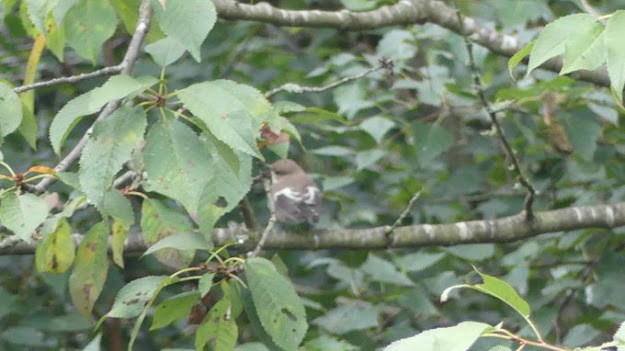
Pied Flycatcher

It had been a good year for Pied Flycatchers, and for the the whole of August I was seeing records of them in all the typical places, like Regent's Park, and from a few new sites as well. Because of this, I always hoped one word turn up here, but never actually expected it - in fact I spent most of my mornings at this site before the bird turned up thinking about Pied Flycatchers, and how great it would be for one to appear in this field. Looking at past records, it looks like this is the first one seen here for 20 years as well.     

But this wasn't the end of the day - a few other local birders turned up, but I unfortunately couldn't relocate the Pied Flycatcher, except once briefly and distantly. However, while looking, another Spotted Flycatcher appeared with a tit flock, the 2nd one of the year. Even more excitingly, a Redstart briefly sat in the same bush the Pied Flycatcher was in, reappearing later and calling constantly. A lesser Whitethroat joined the Chiffchaffs, and when I was about to leave, a couple of Yellow Wagtails flew over. 

It was a strange thing that on that day of patch birding a London tourist site, I saw more migrants than I did when I took the 7 mile round walk down to Spurn Point and that, for the first time, I would have preferred to be on my patch than anywhere else in the UK. I was even motivated enough to finally submit sightings on the London Bird Sightings website. 

There is no doubt this day was the highlight, but the next few days were still great. Another Redstart and flyover Tree Pipit appeared the next week, with my first Whinchat for the patch appearing soon after as well, along with an even better looking Redstart. Another Spotted Flycatcher was sighted by other birders, and the Green Sandpiper re-appeared a couple of times. In between these days, Willow Warblers, Whitethroats, Blackcaps, Swallow passage, flocks of Siskin, Chiffchaffs, Kingfisher, Hobby, Kestrel, Green Woodpeckers, Swifts and many other birds were around to to keep me entertained.
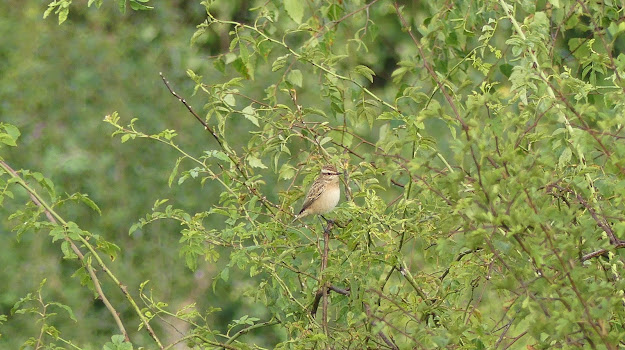
Whinchat

An amazing year on patch (so far!), starting with me being amazed that a Wheatear turned up, and ending with a variety of migrants that equalled the most watched migrant hotspots in London. I never expected this small, heavily disturbed field to get such a variety. There are still problems with the site - dozens of off-lead dogs running around the field, with a few attacking the resident cows, people breaking open the fences to sit by the water and the fact the place is only birdable in the early morning or in heavy rain, but I have finally started to actually like the place.
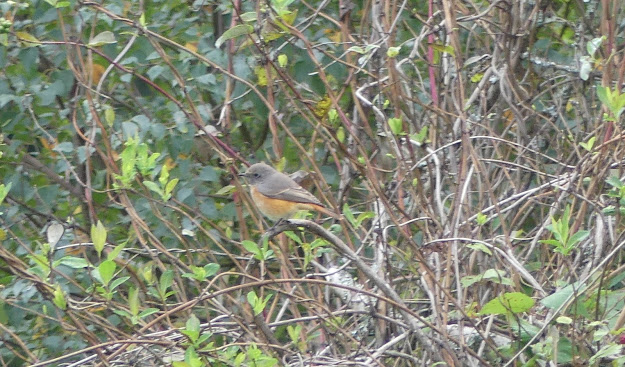
 Redstart 

I am excited to visit regularly for the rest of the year, although it will be harder with school. With everything I've seen recently, I don't really need to see anything more to prove the place can be good for birding though.

Tuesday, 17 September 2019

Migfest 2019

After a a great and successful Migfest last year, I had, once again, been looking forward to another one. Once again, I had made it through to the finals of this year's 'Young Birder of the Year Competition', which was great, as last year's competition was so enjoyable.

After arriving on the afternoon of the Friday, we briefly visited our accommodation in Welwick, before heading down to Spurn. The first stop was Kilnsea Wetlands, where it didn't take long to see the long-staying White-Rumped Sandpiper showing distantly, but clearly. Always awesome to start the trip with a lifer!


There were loads of other waders here as well, including Knot, Dunlin and Redshank. Others birds of interest were Mediterranean Gulls and quite a lot of Pintails, which surprised me for this time of year.


Next, although there wasn't much time left, I had a brief walk around the Triangle to see what was around, which was rewarded with close-up Whinchats and a few flyover Yellow Wagtails. I met David Walsh at the end, who informed me of a potential Hobby he had seen fly through.

Whinchat
This was pretty much the end of the day, although I did attend the talk by David Lindo about Urban Birding in foreign countries, an interesting talk, accompanied by an introduction to this year's Migfest. I travelled back to the pub I was staying at, preparing for the next day, not knowing what to expect in this year's Migfest young birders competition.

I got up early the next day, and made my way down to the seawatching hut. Once again, David Walsh was there, with a few other finalists, as well as Jack, one of the people who had won the competition last year. I arrived to the news that I had missed a couple of Pomarine Skuas, which would have been new for me, but there was compensation in the form of Great and Arctic Skuas, a Manx Shearwater and a Red-Throated Diver. A Merlin was also a great bird to see as it whizzed past.


As I was walking away, however, I soon became aware of a mass of birders following, all having come from the seawatching hut. One of them walked past quickly and informed me there had been a Marsh Warbler caught in the nets at the observatory, and that it would be shown in a few minutes.


Kindly, this birder offered me a lift, which I accepted (one of the great things about Spurn, people often offer lifts to other birders). If no-one had given me a lift, I would have missed the bird as well, so it was lucky, and generous, that they did.


We arrived to see a gathered crowd of birders waiting for the bird to be shown. Then the Marsh Warbler was brought out and shown, with all the key features being seen clearly. The bird was released quickly, and flew in to the surrounding bushes.

Marsh Warbler
I arrived at the observatory, joining the other young birders in the competition. We had some time birding from the Spurn viewing platform before going on our first assessment.

The competition involved things like identifying bird calls, as well as showing our understanding of bird conservation, answering question and birding in the field. It was also good to get close up views of Spotted Flycatcher during this.


The whole thing was, once again, enjoyable, and was won by James King in my category, and Corin Woodhead in the younger one. We had lunch at the observatory, with the winner being officially announced at the evening talk.


Once again, I would like to thank the volunteers, organisers and sponsors for putting this amazing competition together, and keeping it running from year to year.


After the competition, I watched a Peregrine over the observatory, then stopped at Kilnsea Wetlands, seeing the same species as I had done the day before, but again, getting views of the White-Rumped Sandpiper, and better views of Yellow Wagtail.

White-Rumped Sandpiper 
I met David Walsh and some other young birders - Oscar, Fraser and Josh, to attempt some seawatching, although there weren't many birds; a few more Arctic and Great Skuas and another Red-Throated Diver. I decided to go and try to find some flycatchers that were seen earlier, and was directed to a field with a thick hedgerow filled with berries.

Amazingly, this one hedgerow probably contained more migrant passerine species in one place than I had seen all weekend. There were a couple of Lesser Whitethroats, a Common Whitethroat, Goldcrests, Blackcaps and, best of all, Spotted(3 or 4!) and a Pied Flycatcher sitting next to each other, with good views of both.

Pied Flycatcher
After this was the hog roast and talk, which was by Per Alstrom. It was a fascinating talk about species differentiation and migration, which he clearly put a lot of work in to. The awards ceremony also took place for the young birders.

After this, I went back to the accommodation, thinking of how to make the most of my last day at Spurn.


Once again, I got up early the next day, although clearly not early enough, as I found out I had missed a Long-Tailed Skua past the seawatching hut!


Most of the day was spent doing a bird race, but a Mandarin Duck was seen at the seawatching hut while we were nearby, so we went for it and luckily saw it in flight. I also went in to the canal scrape hide, seeing Reed Warbler, Snipe and an amazingly close and showy Kingfisher.


Another highlight of this bird race was getting great views of 3 Curlew Sandpipers on the Humber, one of which was colour-ringed. There was some expectation when a report of a Honey Buzzard further up the coast, heading south, was thought to be on its way to Spurn, but it never did turn up.


Unfortunately, we had to head back pretty soon after this, after eating lunch. Even more unfortunately, as always happens in birding, a Barred Warbler was caught and ringed at the Warren, probably while I was eating lunch in the Crown and Anchor, and I had no idea until about 8 hours later!


There is always something I miss, but it didn't really matter, as the quality of birds over the course of the weekend had compensated for this.


Another awesome Migfest and even more encouragement to go again next year. I might as well try the Young Birder competition application again as well, as even if you don't win, it is a highly enjoyable competition that tests your bird knowledge.


Thank you to everyone who organised and volunteered at he Migfest, I found it even better than last year and I hope the next one will be just as, if not even more, enjoyable!

Tuesday, 28 May 2019

BTO Bird Camp 2019

This was the event I've been waiting for - and from what I'd heard, it was going to be one of the highlights of the year. The BTO runs an annual camp for young birders, based at the BTO headquarters at the Nunnery, Thetford. This was the first time I had been and it definitely won't be the last time I go.

I was driven up on Friday afternoon but, due to heavy traffic, I arrived quite late, while most had already arrived. I chose my tent and unloaded my stuff. In this tent was Michael Sinclair, Calum Mckellar, Wilum Johnston, Rowan Wakefield, Kabir Kaul and Sam Newcombe. We went off to eat pizza, then went inside for the introduction speech, but not before I heard a Treecreeper singing from the woodland.

After the introduction, we took part in a workshop and heard a speech by Faye Vogely about careers in conservation. We picked a job that we might want to do in the future and wrote down what steps we would need to take to get there. Nick Moran gave a speech and we were introduced to one of the volunteers, Ben Porter.

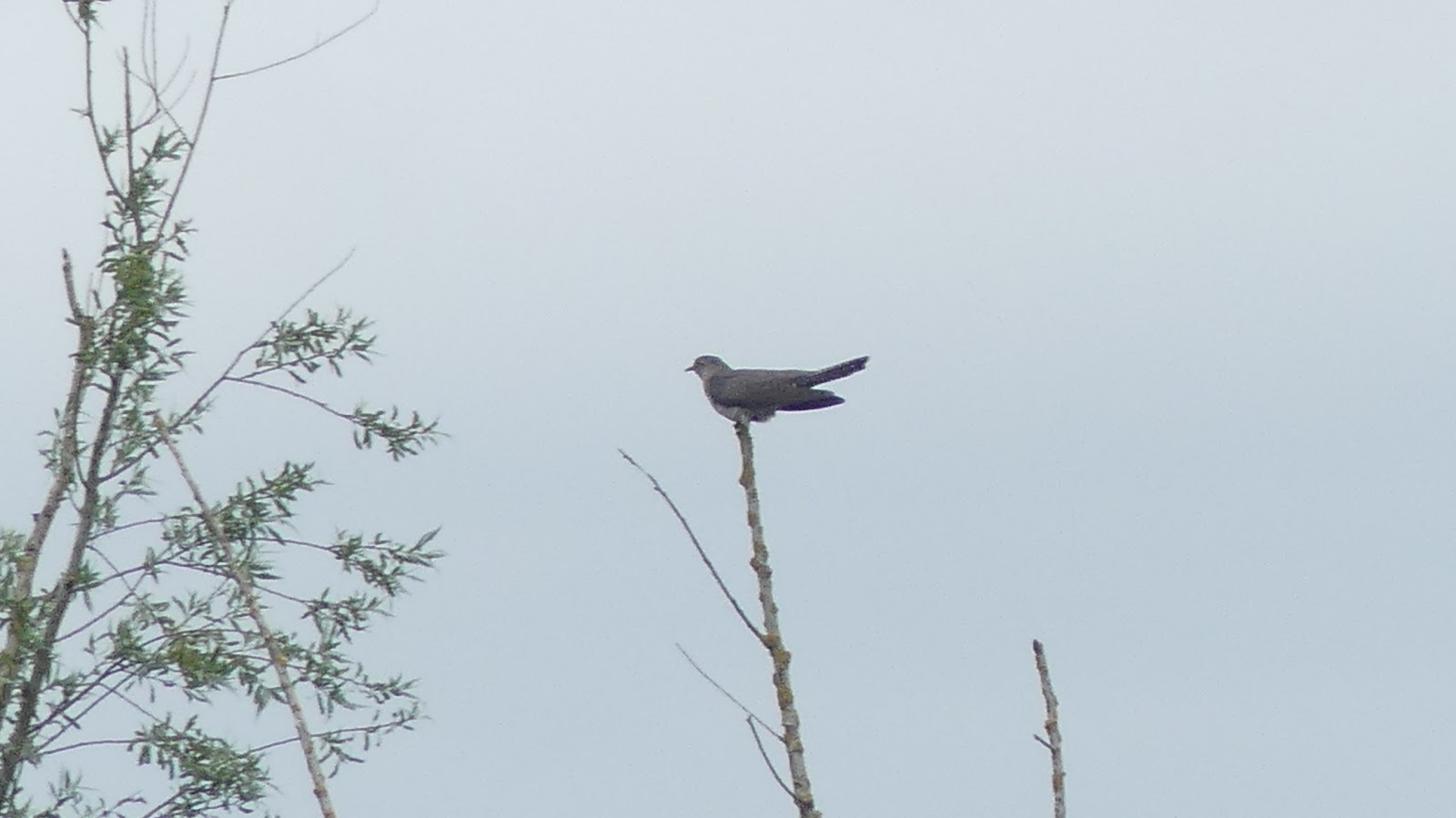
Cuckoo
We then returned to our tents, supposedly to sleep, but after 5 hours of talking, this never happened, which was fine until the next day, when I fell asleep multiple times.

In the morning, we got out of the tent early to search the ground for birds, where there were Singing Sedge and Reed warblers, as well as many other species.


It wasn't long before we checked the moth trap, with some amazing species in it such as Small Elephant Hawk-Moth, Lime Hawk-moth, White Point and many Treble Lines. I thought the moth trap was great and it has encouraged me to construct my own and see what turns up in my garden.

Small Elephant Hawkmoth 
Lime Hawkmoth
Next, we headed to Lakenheath, where we were joined by volunteers, including David Walsh and Chris Mills. We were split into groups and looked for wildlife around the reserve. It wasn't long before we had seen Scarce Chaser dragonfly and many bird species including Marsh Harrier.
Scarce Chaser
We walked along the various paths and found a Garden Warbler and a Variable Damselfly. We entered the hide, where there was, apparently, a Bittern showing well, but it had escaped in to the reeds, unseen by our group. A Hobby that flew past was a good species to see, though.
Azure Damselfly 
After this, we were given a talk by Dave Rogers about the reserve.

We then went off to do some woodland birding, first stopping off to see Stone Curlews at Weeting Heath, then going to a nearby forest ride, where we saw Tree Pipit, Mistle Thrush, Firecrest, and a Dingy Skipper butterfly.


We headed back to camp briefly to eat, and hear a talk about Nightjars before we went out to see them. Unfortunately, being awake for over 24 hours was finally starting to catch up with me, so I fell asleep during the whole talk, only waking up when everyone was getting on the bus to head to the Nightjar site!

Nightjar
After this though, I was fine, and ready look for the birds. At first, we were seeing Woodlarks and Tree Pipits, then Cuckoos flying over constantly. We attempted to get the Cuckoos into the nets for ringing, but they kept flying very near, and not into, the nets.

It wasn't long before Nightjars were churring and Woodcocks were roding. The Nightjars gave good views as they floated around and, very soon, a male was caught in the net. It was brought up to us and we were given the chance to study these amazing birds up close. Another one was caught, this time a female, not as colourful, but still very interesting - this event was probably the birding highlight of the weekend.

That night I was so tired, I actually got some sleep, so was better prepared for the next day.

In the morning, we were transported to the Nunnery Reserve, where we saw Hares and a Stone Curlew on the drive up, as well as a couple of Eurasian Curlews and many Cuckoos. The first stop was at the CES (Constant Effort Site) bird ringing station, where we saw Blue Tit, Reed Warbler, Chiffchaff and a Blackbird ringed.

Reed Warbler
We moved on to bird-territory mapping, where there were many species including Willow Warbler, Garden Warbler and better views of Stone Curlew. Lastly, we looked for bird nests, with a Blackcap's nest found, and many abandoned Woodpigeon nests.
Stone Curlew
Back at camp, we went through the previous night's moth trap, which had a Brimstone Moth, Turnip and Figure of Eighty. 

We packed our stuff up and went inside for a summary of the camp and speeches from some of the young birders. The final bird of the trip was a Swift that had flown in to the building, which was picked up and set free by the volunteers, after it was shown to the crowd of participants and their families.

White Ermine
Figure of eighty
Overall, this camp was a great experience to see wildlife and meet new people, as I have met few wildlife enthusiasts near my age. I will, hopefully, be applying to come back next year, and meet up with people from the camp again at other events, including the Birdfair later in the year. The 'bird camping' isn't over yet though, as I have another one next weekend in the New Forest, which I hope will be equally as good!

Thank you to the many volunteers who helped organise and run the camp, the Cameron Bespolka Trust for supporting it and the BTO for creating it! One of the best parts of the camp was meeting and talking to all the young birders - some who I will probably meet again.


Monday, 27 May 2019

WAXWINGS and Other Local Birds

With the news of Waxwings at Wimbledon in early March, I decided it was finally time to track down this species which I have wanted to see for a long time. The next day was a Saturday, so I travelled down to Wimbledon on the train early in the morning, and arrived at the location where they had been seen.

However, it was immediately evident that I had messed up - after an unsuccessful search for them, I checked Twitter again to see that the only time they were coming to this park was to roost, but spent the day in some other unknown location.

I twitched a Med Gull at my patch, Stocker's Lake - an unusual bird for the lake, usually with just a single record a year
I searched the surrounding area hopelessly, with no success in finding the Waxwings, and had to give up. But there were some interesting species in the park, including Redwings carpeting the floor, including some singing ones, and a few Mistle Thrushes

I decided the best thing to do was to go birding somewhere local and return in the late afternoon, so I went to London Wetland Centre, where there is always a chance of something good. I made straight for the Peacock Tower hide, the best one for viewing a wide range of habitats. 


I couldn't find much except a Snipe over a long period of time, so I went to check the Gulls from the hides on the other side of the reserve. There were, however, a couple of problems. Firstly, many of the Gulls were sitting on distant islands and rafts, and I didn't have a scope with me, so judging any plumage details was difficult.


Secondly, and worst of all, my camera was out of charge, so I knew that if I did return to the Waxwings later, I would have to stick with views (usually, I prefer watching birds over photographing them, but its always good to get at least record shots of interesting species).


I did have some luck in the hide, with a Snipe coming right up to the window, and I found a Yellow-Legged Gull on one of the tern rafts, thanks to one of the volunteers letting me borrow their scope to scan briefly. 

YLG taken through a volunteer's scope
It was a good, distinctive bird, clearly bigger and chunkier than herring gulls, with clean plumage, but I can't say everyone else in the hide shared my excitement with this big brown immature gull.

By the time I was finished here, it was the evening, and I decided to head back to Wimbledon to try again with the Waxwings. I met up with Kabir and Arjun at the site, and there were lots other birders, although most of them were trying hard not to make themselves visible. 


I was talking to Arjun and Kabir when a high pitched, piercing sound made everyone turn their heads at once, and walk over to the source. It was clearly a Waxwing call, and it wasn't long before we saw the birds fly in and land at the top of a bare tree. 


For the next half hour we enjoyed reasonable views of the birds, at the top of one of the trees. Although the light wasn't great, once would occasionally shift position and sit against the tree, giving great views of the plumage.


 I, annoyingly, couldn't take any photos with my camera, but tried for a couple of phone record shorts through my binoculars. Honestly, with the end results, I don't know if they're good enough to be classed as record shots. 

Artistic Waxwing shot
Both Arjun and Kabir got much better photos than me, even though the conditions for photography were challenging. This was my second lifer of the year - new birds are becoming harder to find now. 

Other local birding was done in the period leading up to the Easter holidays, including a few visits to Maple Lodge, producing Snipe, Water Rail, Green Sandpiper and Oystercatcher, and a visit to Stocker's Lake to successfully twitch the Mediterranean Gull

Water Rail
Lastly, I visited Burnham Beeches, where I was unsuccessful in finding any Lesser Spotted Woodpeckers, but did manage two flyover Lesser Redpoll, two Bramblings, Siskins, Mandarin Ducks, Nuthatches, a Treecreeper and a couple of Woodcock.
Snipe
Oystercatcher

The Brecks In February

After staying local for most of the February holidays, I decided to head further to see some Norfolk specialities in the Brecks. I spent the weekend around Thetford in Norfolk, and had a day guided by Carl Chapman again, who I had been guided by several times before.

I met him early on the Saturday, and we travelled to the first site of many for the day. The first birds included Goldcrest, a singing Mistle Thrush and a large finch/bunting flock which included Linnet, Yellowhammer and dozens of Bramblings, which were calling constantly.


However, the fog was too thick to look for any Goshawks, so we went to the next site. Birds here included Goldcrest, Coal Tit and Yellowhammer. The best bird though was the Woodlark, which was song-flighting and gave great views, showing off ID features such as the short tail.

Brambling
After getting good views of Woodlark, we looked for more birds around the area, including Green Woodpecker.

We went back to the original site to look for Goshawks, as the fog had almost cleared, and viewing conditions were good enough. We arrived at a site full of people, and set up the scopes. Very soon, I noticed a raptor flying over the distant pines, and was sure it was a Goshawk.


I got Carl on to the bird, and he confirmed it was a Goshawk, while putting everyone else on to the bird. Only the second I've seen in Britain, with both at this site.


The goshawk was in view for a while, and a second appeared, drifting closer until it was almost right above us, giving amazing views.


We headed to the next site at Santon Downham, where we were unsuccessful in the search for Lesser Spotted Woodpecker. However, there were loads of other good birds seen, including Brambling and Siskin on the nearby feeders. The other highlight here was a couple of Otters, which came within a metre of us and showed very well, undisturbed by the many admirers.

The Otters showed well...
The final site of the day was at Lynford Arboretum, where we searched for the regular flock of Hawfinch. We found them feeding on the floor below a large tree, with a few males giving good views out in the open. I watched these for a while, until they flew in the tree, then seemed to somehow disappear, without anyone seeing them go.

There were loads of other good birds seen here, including male Crossbills giving prolonged views, a fearless Water Rail that came very close, and dozens of Marsh Tits, singing and showing well.


The highlight, however, was probably the Firecrests, tracked down from their high-pitched song. One individual showed well, coming out of the dense trees to give unobscured views on open branches.


We finished the day waiting for a murmuration of Starlings, but it must have been the wrong conditions, as the only Starlings I saw were in small groups. It had been a successful day, and I started to work out what to do the next day.

Amazing picture of a couple of Woodlarks
I started the Sunday off at Santon Downham again, where I tried for Lesser Spotted Woodpecker for the second time. After some waiting, I heard its hawk-like call from nearby in the woodland, and I began scanning the trees for it.

Eventually, I noticed it at the top of a nearby Alder, and tried to put everyone else nearby on the bird, although my directions were pretty confusing.


Another bird joined it, and they began chasing each other around the woodland, calling constantly, until they flew over the other side of the river, and deep in to the woods. While I was walking back along the path, I heard one of them drumming, before they fell silent.


Other birds seen here were another obliging water Rail, a Marsh Tit, Bramblings and many Siskins.

This Water Rail showed well
The decision for the final site of the day was hard, as I didn't have long left. At first I considered Burrel Way - the gull site in Thetford - but decided that, while in the Brecks, there were better things to do than stare at gulls, so I tried a new site to look for Willow Tit instead.

I found the feeder that had been set up for them when I arrived, and stood a few metres back to set up the scope, while birds were still coming to the food. Birds on the feeder included Blue, Great, Coal and Marsh Tit, but no Willow Tits.


I met a group of birders who said one had been heard singing further down the path earlier in the day, but I had just a few minutes before I had to catch a train back to London. So I had to abandon the Willow Tit search (though probably not for the last time) and head back to London.

Cliffe Pools and Some Local Stuff

During the week-long holiday in February, there isn't always masses to do except looking for local stuff around the Colne Valley, which is what I did for most of it. However, I always try to organise more long-distance trips over holidays, so, on the Wednesday, I decided to head to Cliffe Pools in Kent, hoping for waders and, importantly, the many grebe species they had recently had.

I got up early to begin the train journey to Cliffe, not too bad, but still too long to do regularly. I arrived at a a place which was different from what I expected, and began to scan the first pool. There was a Little Grebe, many Mediterranean Gulls, and some waders such as Redshank, Lapwing and Golden Plover.


The pools had the same range of species on them, but one had a pair of Goldeneye, and someone told me they had a Spoonbill on one, before it had been scared off by a raptor.


I spent the next couple of hours wandering around random paths, trying to find the Alpha Pool, with no luck, seeing nothing but a Marsh Harrier, and constantly thinking I'd found the right path until I realised it was a construction site, or an overgrown path that led nowhere. However, I eventually found the correct path and reached the Alpha Pool, where there were dozens of Teal on the Thames, and a couple dozen Grebes on the pool.

Red-Necked Grebe
Most were Little Grebes, with a few Great Crested Grebes mixed in. I scanned but could find nothing else, until I noticed a Grebe closer than the rest, which was immediately recognisable as a Red-Necked Grebe - my first lifer of 2019. It showed well - better than most of the other Grebes, but was unfortunately swimming away.

I scanned for more birds, and found the flock of four Black-Necked Grebes, more distant than the Red-Necked Grebe, and not the best view I have ever had. But these were amazing views compared to what I had of the Slavonian, right at the other end of the pool, which was so far away that it was barely visible in the scope.


For many of the other days of the holiday, I stayed local, visiting Stocker's Lake to look for Lesser Spotted Woodpecker, but had no success. However, there were Treecreepers, Siskins and displaying Goldeneye.


 I also visited Broadwater with Kabir while he was doing the his WeBS survey, where we saw many species of wildfowl, including Goldeneye, and some other birds such as large flocks of Siskins.

Treecreeper
However, the best bird of the holiday was probably in Wendover Woods, where I had planned to spend all day looking for Crossbills. I thought it would take all day to find them, so I didn't expect to hear them calling from the car park when I opened the car door - before I had even got out!

I took the scope out and managed to find an adult male Crossbill on top of a pine tree, and had good views in great light (for once). Meanwhile, one was singing from deeper in the woods, and they were constantly calling.


Since I had seen my target so early, I decided to visit College Lake briefly, mostly to see what it was like. It looks like a good reserve, but is far from local, so I'll only visit occasionally. On this visit I managed to see my first inland Oystercatcher of the year.

Short Summary of EXTREMADURA

I recently birded Extremadura with Heatherlea, a bird-filled region in Spain, with countless new species, and good views of many of the commoner species. Even the hotel grounds had lifers for me, and the most colourful birds were often the most common. This is just a short summary about a trip I could write a lot more about but, over a month after I went, I've fallen behind on blog writing. 

One highlight included the variety of raptors, including mating Spanish Imperial Eagles, hunting Short-Toed Eagle and abundant Booted Eagles. I also had more distant views of Bonelli's and Golden Eagles, but ID features were seen well on both species. 

There were also smaller raptors, such as the Lesser Kestrels nesting in towns, and a distant Black-Shouldered Kite flying high in the sky. Griffon Vultures were common, with Black seen most days and Egyptian seen a couple of times. Other species included many Black and Red Kites, Buzzard, Osprey, Peregrine and Common Kestrel.

Another highlight was the huge variety of warblers, including many new species, such as Spectacled, Subalpine, Sardinian and Western Bonelli's. It was, however, the Western Orphean Warbler that was the highlight of the warblers, and probably the birds, of the trip. A shy warbler that showed well for a brief period and singing constantly. 

Other warblers included Dartford and the more common species. 

Birds were everywhere, including by the roadsides, so we were constantly stopping the bus to watch Roller, Bee-Eater, Iberian Grey Shrike, Zitting Cisticola and Woodchat Shrike.

Birds of the Plains included many displaying Great Bustards, a displaying male Little Bustard, Black-Bellied Sandgrouse in flight, and some more familiar species such as Little Owl. 

Larks were numerous, with Short-Toed, Calandra, Crested, Thekla's and Woodlark. Some days we entered different habitats - the marshes and pools held Black-Winged Stilts, Purple Swamphens, Little Bitterns, Gull-Billed Tern and Penduline Tit. 

We drove up to high altitudes one of the days for some specialist species - this is where I saw the Western Bonelli's Warbler, and other species such as Golden Oriole, Iberian Green Woodpecker and Short-Toed Treecreeper. 

With all these specialities, there were many common birds, with Corn Buntings and Crested Larks everywhere, and Red-Rumped Swallow, Crag martin, Alpine Swift and Pallid Swift were seen over bridges and towns. 

Other species included Blue Rock Thrush, Nightingale, Black Redstart, Spanish Sparrows, Cirl Bunting, Common Waxbill, Red Avadavat, Rock Sparrow, Great Spotted Cuckoo, Purple Heron, Cattle Egret, Montagu's Harrier and Quail.

It was a great place, and a new area for me. Birds were everywhere, including beside motorways and near the hotel. I would definitely come back here, even though I saw most of the targets, as the chorus of Corn Buntings remind me of what Britain could have been like with the correct habitat. Thanks to the excellent, skilled guides at Heatherlea, who found the amazing birds and were friendly and helpful.
Booted Eagle
Bee-Eater
Blue Rock Thrush
Hoopoe 
Crag Martin
Black Vulture
Lesser Kestrel
Red Avadavat 
Western Bonelli's Warbler 
Short-Toed Lark
Thekla's Lark